 AlphaSploit
Secure by Design
Application Security
Embed security into your software development lifecycle from code to deployment
Application Security integrates security practices into every phase of software development—from design and coding through testing, deployment, and maintenance. Our AppSec team works alongside development teams to identify vulnerabilities early, implement secure coding practices, and build security into CI/CD pipelines.
Compliance Frameworks
Aligned with industry standards trusted by governments and enterprises
Overview
What is Application Security?
What
Application Security covers the processes, tools, and practices that protect software applications from threats throughout their lifecycle. It includes secure code review, SAST/DAST scanning, dependency management, API security testing, and developer security training.
Why
Applications are the primary attack vector for data breaches. 74% of breaches involve the human element, and web applications remain the top attack surface. Shifting security left—into development—reduces vulnerabilities by 80% compared to finding them in production.
Common risks we find
- SQL injection and injection flaws remain top attack vectors
- Third-party library vulnerabilities introduce unmonitored risk
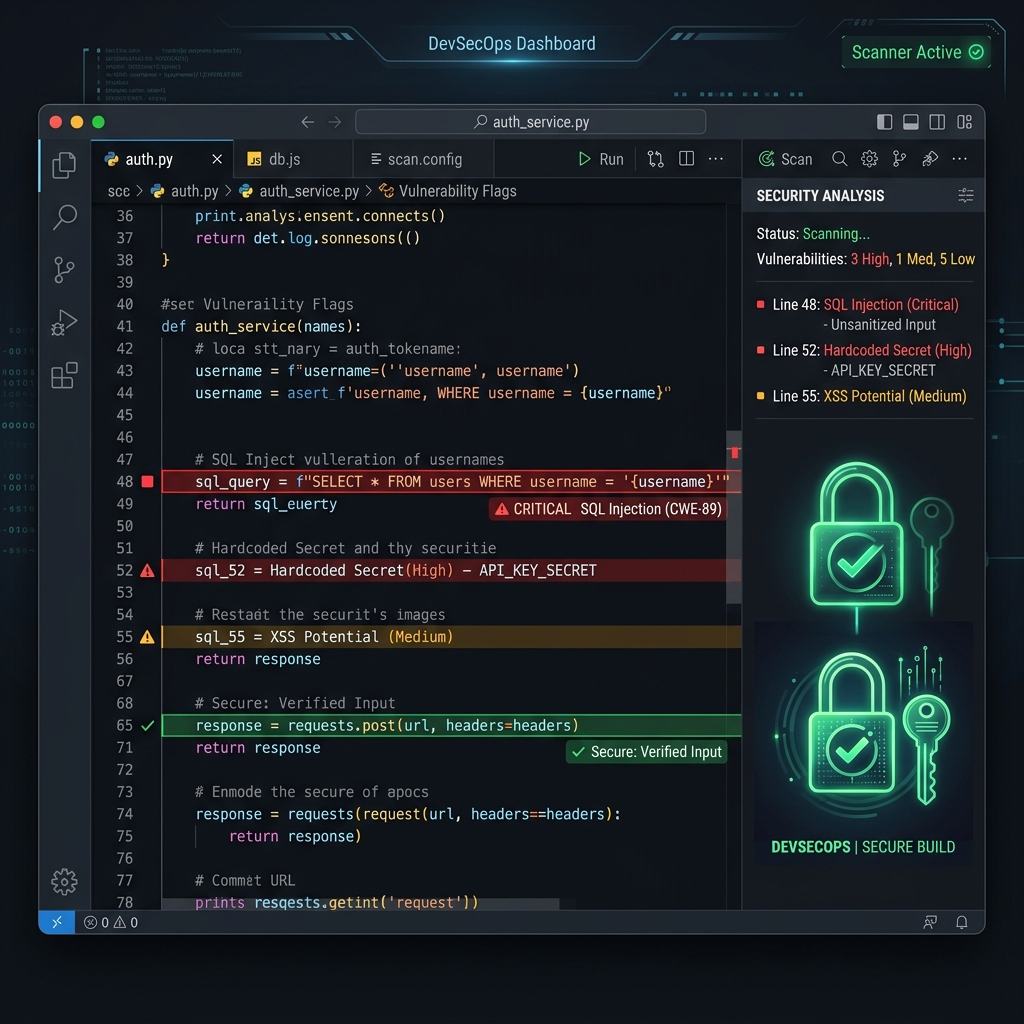
- Hardcoded secrets in source code create credential exposure
- Insecure APIs enable unauthorized data access and manipulation
- Lack of security testing in CI/CD allows vulnerabilities to reach production
- Developer security knowledge gaps lead to consistent vulnerability patterns
Business impact of vulnerabilities
- Organizations with DevSecOps reduce application vulnerabilities by 80% (Synopsys 2024)
- Shifting security left reduces remediation costs by 100x compared to production
- Automated SAST/DAST scanning catches 67% of vulnerabilities before code review
- Dependency scanning prevents 43% of supply chain attacks
- API security testing reduces unauthorized access incidents by 71%
- Developer security training reduces vulnerability density by 55%
Programs
What we offer in this category
Secure SDLC Implementation
Establish a Secure Software Development Lifecycle with security gates, automated scanning, and developer training. Integrates security into agile workflows without slowing development velocity.
Application Penetration Testing
Deep-dive security testing of web applications, mobile apps, APIs, and desktop applications. Manual testing by experienced Application Security engineers uncovers business logic flaws and complex vulnerabilities.
Source Code Review
Manual and automated analysis of application source code to identify security flaws, insecure patterns, and compliance violations. Covers authentication logic, session management, data handling, and cryptographic implementations.
DevSecOps Pipeline Integration
Integrate SAST, DAST, SCA, IAST, and secrets scanning into CI/CD pipelines. Includes tool selection, policy configuration, and developer workflow integration.
API Security Testing
Comprehensive security testing of REST, GraphQL, and SOAP APIs including authentication, authorization, rate limiting, data validation, and business logic abuse.
Services included
Complete service catalog
Methodology
Our approach
Design Review
Evaluate application architecture and design for security implications.
- Threat modeling (STRIDE, PASTA, Attack Trees)
- Architecture security review
- Authentication and authorization design validation
- Data flow and trust boundary analysis
- Third-party component risk assessment
Code Analysis
Identify vulnerabilities in source code through static and manual analysis.
- Static Application Security Testing (SAST)
- Manual secure code review
- Dependency and composition analysis (SCA)
- Secrets and credential detection
- Custom rule development for business logic
Dynamic Testing
Test running applications for vulnerabilities through automated and manual techniques.
- Dynamic Application Security Testing (DAST)
- Interactive Application Security Testing (IAST)
- API fuzzing and input validation testing
- Authentication and session management testing
- Business logic abuse testing
Remediation & Validation
Support developers in fixing vulnerabilities and validate remediation effectiveness.
- Developer-friendly finding reports with fix guidance
- Pair programming for complex vulnerability fixes
- Retesting and verification of remediations
- Security regression testing
- Security metrics and trend reporting
Process
Our engagement process
Application Inventory
Catalog all applications, APIs, and services with criticality classifications.
Application portfolio with risk ratingsApplication Inventory
Catalog all applications, APIs, and services with criticality classifications.
Application portfolio with risk ratingsThreat Modeling
Identify threats, attack vectors, and security requirements for each application.
Threat models with risk-ranked attack scenariosThreat Modeling
Identify threats, attack vectors, and security requirements for each application.
Threat models with risk-ranked attack scenariosSecurity Testing
Execute comprehensive security testing using automated and manual techniques.
Vulnerability findings with exploitation evidenceSecurity Testing
Execute comprehensive security testing using automated and manual techniques.
Vulnerability findings with exploitation evidenceDeveloper Remediation
Support development teams in implementing fixes with guidance and retesting.
Remediated code with verification resultsDeveloper Remediation
Support development teams in implementing fixes with guidance and retesting.
Remediated code with verification resultsPipeline Integration
Embed security scanning into CI/CD for continuous vulnerability detection.
Automated security gates in development pipelinePipeline Integration
Embed security scanning into CI/CD for continuous vulnerability detection.
Automated security gates in development pipelineContinuous Improvement
Track security metrics, train developers, and refine testing approaches.
Monthly AppSec metrics and improvement reportsContinuous Improvement
Track security metrics, train developers, and refine testing approaches.
Monthly AppSec metrics and improvement reportsDeliverables
What you receive
Application Security Assessment
Comprehensive vulnerability report with CVSS scoring, business impact, and remediation guidance.
Threat Model Documentation
STRIDE or PASTA threat models with attack trees and mitigations for each identified threat.
Secure Coding Guidelines
Language-specific secure coding standards, anti-patterns, and best practices for developers.
DevSecOps Pipeline Configuration
CI/CD security integration with tool configurations, policies, and workflow documentation.
Developer Training Materials
Custom security training content including hands-on labs and vulnerability examples.
Application Security Metrics Dashboard
Tracking metrics for vulnerability density, fix time, and security test coverage.
Benefits
Results you can count on
Shift-Left Security
Catch vulnerabilities early in development when they are cheapest and easiest to fix.
Developer Empowerment
Enable developers to write secure code through training, tools, and accessible guidance.
Automated Detection
Continuous security scanning in CI/CD pipelines catches vulnerabilities with every build.
Reduced Technical Debt
Proactive security practices prevent accumulation of security debt in application code.
Faster Release Cycles
Automated security gates reduce manual review bottlenecks while maintaining security standards.
Supply Chain Security
Dependency analysis prevents vulnerable third-party libraries from entering your applications.
Metrics
Key metrics
Engagement Formats
How we work
Application Security Audit
Rapid assessment of application security posture with critical finding identification.
Full Application Assessment
Comprehensive testing including code review, DAST, API testing, and business logic analysis.
DevSecOps Transformation
Full SDLC security integration with pipeline automation, training, and process maturity.
FAQ
Frequently asked questions
Contact
Get started today
Ready to secure Application Security?
Speak with a lead security engineer about scope, timeline, and what success looks like for your assessment.